Business success
is as simple as solving
the right puzzle.

We turn the experience of those who have already solved the puzzle into the advantage of those still working on it so that more businesses succeed, more economies grow, and more people share in the prosperity that follows.

The Start-Up Puzzle
BP PublishingBP ConsultingBP AcademyPractitioner FrameworksReal Business OutcomesDecades of In-Market ExperienceBusiness School PerspectiveBP PublishingBP ConsultingBP AcademyPractitioner FrameworksReal Business OutcomesDecades of In-Market ExperienceBusiness School Perspective

Every failed business is wasted potential. The Business Puzzles exists to change that.

We combine hard-won in-market experience, insights from subject matter experts, and leading academic thinking from Europe's top business schools into simple, practical frameworks you can apply immediately.

The Platform

Three pillars. One mission.

01 / 03

BP

Publishing

Practitioners Guides

Books with proven frameworks built on decades of in-market experience. Each book tackles a critical business challenge, giving you the diagnostic tools to understand your situation and the playbook to act on it immediately.

Explore the books →

02 / 03

BP

Consulting

Expert Advisory

The expertise trusted by the world's leading consulting firms when in-market depth truly matters is now available to you. High-touch, outcome-driven advisory for organisations committed to delivering measurable results.

Learn more →

03 / 03

BP

Academy

Learning and Speaking

Keynotes, workshops, (university) lectures, and executive education partnerships that bring the Business Puzzles frameworks to students and leaders around the world. Ideas that inspire action and deliver impact.

Check availability →
BP Publishing

The Business Puzzles Series

Frameworks for the challenges
that keep leaders up at night.

In a world of increasing complexity and constant pressure to perform, working harder is not enough. You need frameworks that help you work smarter. Our practitioner guides are practical playbooks for today's most critical business challenges, created by global business leaders, subject matter experts, and leading business school scholars who have guided organisations through the same transformations you are facing. Each book shows how real in-market success is built on repeatable structures, focus, and clear logic. Combining decades of hands-on experience, expert interviews, and academic insight, we translate complexity into simple, actionable frameworks supported by real examples. Now you can turn knowledge into action and build better businesses.

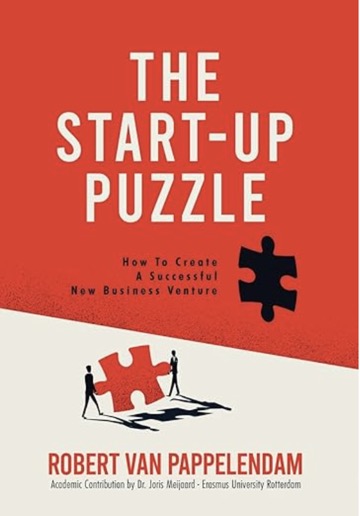
The Start-Up Puzzle

How to create a successful new business venture

Concise, immediately applicable guidance without the padding. Real-world examples and cutting-edge academic research give founders a practical toolkit to navigate the most common failure points of the entrepreneurial journey.

The toolkit every founder wishes they had on day one.

Order now → The Start-Up Puzzle book cover

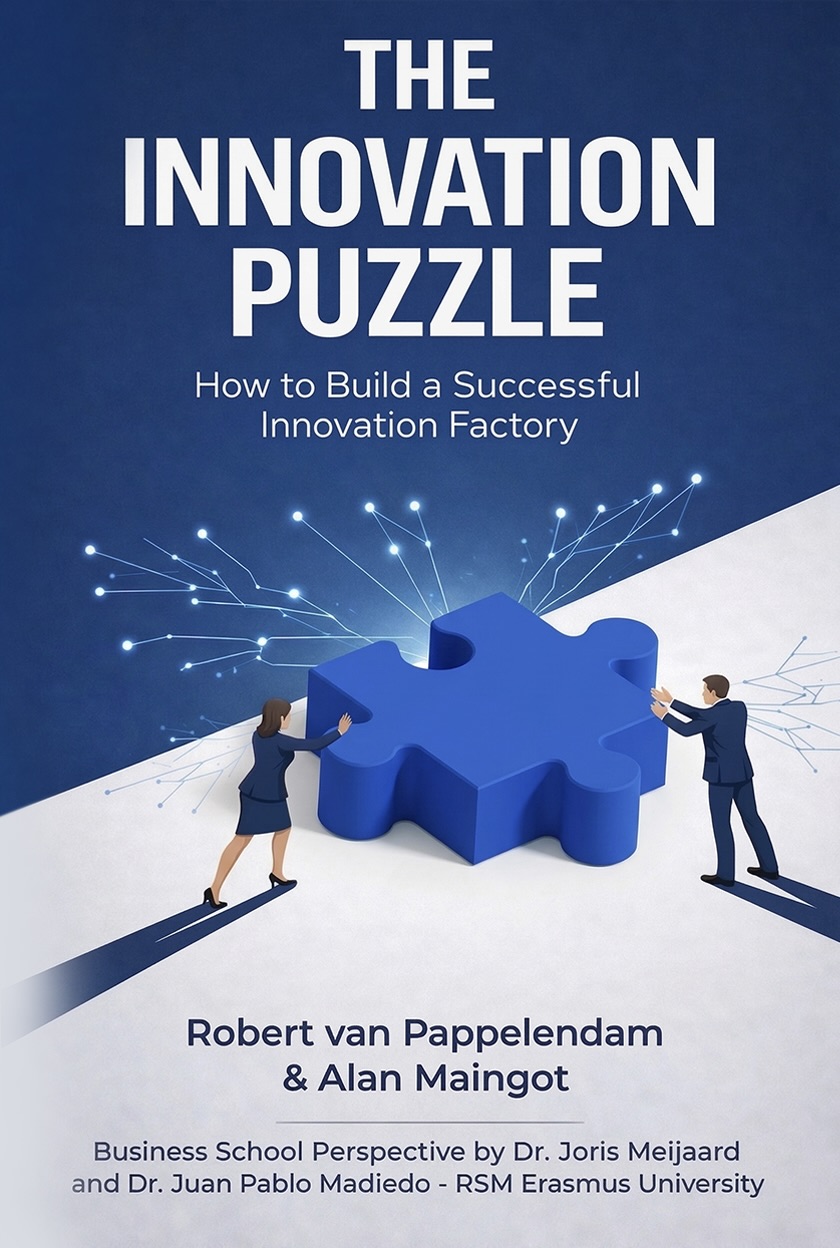
The Innovation Puzzle

How to build a successful innovation factory

Innovation rarely fails for lack of ideas. It fails because organisations are structurally designed for predictability, not breakthrough. A rigorous blueprint for redesigning your operating model to make real, repeatable innovation possible.

Innovation is not a brainstorm. It is a system. And this is the manual you need.

Order now → The Innovation Puzzle book cover

The Premium Growth Puzzle

How to drive business growth through premiumization — COMING SOON!

In flat or mature categories, the path to growth runs through premium positioning. How to build, price, and communicate premium propositions that customers will pay more for, even in cost conscious markets.

Premium is not about price. It is about perceived value.

Notify me on launch → The Premium Growth Puzzle book cover
3+
Practitioner guides
4+
Continents reached
Puzzles left to solve

"Trusted by global executives, business school faculty, and leadership teams who want practitioner-grade insight, not recycled theory."

BP Consulting

From insight
to impact.

Advisory built for leaders who need results, not reports. We work with executive teams, boards, and leadership functions to diagnose the real constraints on growth, design solutions that hold in practice, and build the internal capability to sustain them.

The expertise that the world's top consulting firms turn to when they need it most is now directly accessible to you.

The Consultants Consultant
Book a discovery call
  • Strategy and growth advisory for organisations navigating their next phase
  • Innovation workshops and sprints to unlock repeatable breakthrough inside established companies
  • Organisational transformation covering operating model design, alignment, and change capability
  • Executive coaching for senior leaders navigating high stakes decisions and transitions

Every engagement begins with a structured diagnostic. We do not propose solutions before we understand your specific situation. We are a curated network of expert practitioners who bring precisely the right expertise to your challenge.

BP Academy

BP Academy

Ideas that move rooms and the organisations behind them.

BP Academy brings the intellectual depth and practitioner authority of the Business Puzzles platform to stages, lecture halls, boardrooms, and conference programmes worldwide.

Whether your audience needs a keynote that reframes their thinking, a workshop that equips a leadership team with new tools, or a guest lecture that connects theory to practice, BP Academy delivers experiences that people act on.

Check availability

Keynote Speeches

Compelling, content rich keynotes for conferences, leadership summits, and annual meetings worldwide.

Corporate Workshops

Half and full-day programmes designed to produce tangible outputs — decisions made, priorities set, plans agreed.

Guest Lectures

Practitioner perspectives for business school programmes, bridging theory and real-world practice.

Executive Education

Structured partnership programmes with business schools and executive education providers.

Latest Thinking

From the Business Puzzles blog.

Teams

How Can Small Teams Create Real Innovation?

Focus is a form of leverage. Small teams succeed not despite their constraints but because of them — when those constraints force the focus innovation actually requires.

Read more →

Career

How Can I Tell If a Job Will Let Me Work on Meaningful Problems?

Meaningful work is easier to promise than to deliver. Here is how to honestly evaluate whether a role will let you work on problems worth solving.

Read more →

Strategy

Why Do Some Companies Innovate Better Than Others?

The answer lies in whether organizations have assembled all the right pieces of the innovation factory — and whether those pieces are working together.

Read more →

Culture

What Questions Should I Ask Companies About Their Innovation Culture?

The most revealing question is the simplest: what was the last thing that failed here, and what happened next?

Read more →

Innovation

How Do I Find Companies That Actually Innovate Instead of Just Talking About It?

Start with outcomes, not announcements. Genuine innovation leaves a trail: new categories created, problems solved in novel ways, measurable changes in how customers behave.

Read more →

Innovation

How Do I Spot Red Flags When a Company Claims to Be Innovative?

Ask about the mission. A genuinely innovative organization can articulate with clarity what problem it is solving — vague answers are a red flag.

Read more →

Innovation

What Makes a Company Truly Innovative vs Just Following Trends?

Every company says it innovates. Few actually do. The difference begins with strategy — genuine innovation is never accidental, and trend-followers cannot answer the WHY.

Read more →

Starting Up

The #1 Start-Up Mistake That Ruins Growth

Starting a business is full of promise — but the path to entrepreneurial success is often derailed by one avoidable mistake.

Read more →

Innovation

Want to Build a Unicorn? Start by Falling in Love with the Problem

The most iconic start-ups — Airbnb, Stripe, Nutrafol — all began with an obsession over the problem, not the product.

Read more →

Leadership

The Real Reason Start-Ups Win: It Is the People

The secret behind every successful start-up is not the idea, the funding, or the timing. Talent and resilience are the ultimate unfair advantage.

Read more →

Strategy

The Discipline of Pivoting: How to Change Course Without Losing Direction

Every founder faces the moment when the plan fails. The pivot is not a sign of weakness — it is a strategic skill.

Read more →

Growth

From MVP to PMF — Why Go-To-Market Fit Is the Real Make-or-Break

In the start-up world, we celebrate ideas. But ideas without go-to-market fit are just expensive experiments.

Read more →

Mindset

Why Knowledge Alone Will Not Save Your Start-Up

There has never been more free information about entrepreneurship. Yet failure rates have not fallen. Here is why.

Read more →

View all posts →

Ready to solve your puzzle?

Tell us your challenge. We will connect you with the right solution.

About

The Authors

The minds behind
the Business Puzzles series.

Robert van Pappelendam

Author — The Start-Up Puzzle & The Innovation Puzzle

After getting his Master's degree in Dutch Civil Law at Erasmus University Rotterdam, he built up over 30 years of experience in International Corporate Business Leadership roles and was simultaneously involved in various start-ups in FMCG, Luxury, and MedTech as a founder, advisor, and angel investor. He has been the commercial leader of well-recognized and awarded global brand and innovation programs. As a lifelong learner, he has always been fascinated to see organizations transform into unstoppable lions. Robert's core interest areas are Strategy, Innovation, Marketing, Entrepreneurship, and New Business Development. Robert has become a bestselling and award-winning author and lecturer with his first research and publication, The Start-Up Puzzle.

Alan Maingot

Co-Author — The Innovation Puzzle

Matriculated with a degree in Chemical Engineering from the Technical University of Nova Scotia and was awarded the prestigious Canadian Society of Chemical Industry Gold Medal. He spent 36 years in R&D at Procter & Gamble, with responsibilities across multiple categories. He was the global R&D Vice President (Chief R&D and Innovation Officer) for P&G's Global Oral Care, Global Family Care, Global Baby and Feminine Care, and Global Hair and Beauty Care, sitting on the CEO's multifunctional leadership teams leading innovation, innovation strategy, and delivery. Since 2019, he has been the Founder and CEO of Maingot & Kaw Innovation and Leadership Consulting, LLC, advising both start-ups and mid-to-large companies on innovation, innovation strategy, and effective innovation organizations.

Dr. Joris Meijaard

Academic Contributor — Rotterdam School of Management, Erasmus University

Academic Director of the Department of Strategic Management and Entrepreneurship at Rotterdam School of Management, Erasmus University Rotterdam. He graduated as an econometrist and obtained a PhD in Business Economics at Erasmus University Rotterdam. Joris has more than 20 years of experience in economic and business policy research. In 2011, he founded research agency MIR, which specializes in innovation and company growth. Joris focuses on the development and evaluation of innovation and entrepreneurship policy, as well as entrepreneurship and new business development.

Dr. Juan Pablo Madiedo

Academic Contributor — Rotterdam School of Management, Erasmus University

Associate Professor at Rotterdam School of Management, Erasmus University. He is a member of the Erasmus Center for Innovation and the Academic Director of RSM's MSc Management of Innovation Program. He obtained his PhD in Business Studies from IE Business School, IE University in Spain. Before joining RSM, Juan held positions at IE University in Spain and Universidad de los Andes in Colombia. In recent years, he has held a visiting scholar position at INCAE Business School in Costa Rica.

"To turn the experience of those who have already solved the puzzle into the advantage of those still working on it."

© 2025 Business Puzzles. All rights reserved. www.businesspuzz

Coming Soon

Be the first to know.

The Premium Growth Puzzle is on its way. Leave your email and we will notify you the moment it launches.

Teams

How Can Small Teams Create Real Innovation?

Some of the most consequential innovations in history came from small groups of people working with limited resources and enormous focus. Yet inside larger organizations, small teams often struggle to gain traction, compete for budget, and protect their ideas from the forces of the existing business. How do small teams break through?

The first answer is clarity of mission. The Innovation Puzzle teaches that innovation programs fail more often from strategic ambiguity than from lack of ideas. A small team that knows precisely which customer problem it is solving, why that problem matters, and what success looks like is already ahead of most large, well-funded teams that lack that clarity. Focus is a form of leverage. When a small team cannot afford to pursue everything, it is forced to pursue what actually matters.

The second advantage small teams have is proximity to the customer. Large organizations often filter customer insight through layers of research, internal summaries, and stakeholder presentations until the original signal becomes unrecognizable. Small teams can talk directly to customers, observe them in context, and iterate based on what they learn in near-real time. This is exactly the kind of customer intimacy that the Innovation Puzzle framework identifies as foundational to any successful innovation process.

Speed is another structural advantage. Small teams can prototype, test, and learn in cycles that larger organizations cannot match. The ability to move quickly from a hypothesis to a real-world test, gather feedback, and adjust is enormously valuable in innovation contexts where the right answer is rarely obvious at the outset. As the book notes, companies that move too slowly die not from being wrong but from being late.

What small teams often lack, and what they need to be deliberate about building, is a clear path from innovation to commercialization. The Innovation Puzzle identifies commercialization as one of the most neglected pieces of the innovation factory. Having a good product is necessary but not sufficient. A small team that does not think early about distribution, sales enablement, and market access will find that great ideas stall at the point of scale. Mapping the commercialization journey is as important as designing the product.

Small teams succeed not despite their constraints but because of them, when those constraints force the kind of focus, speed, and customer proximity that innovation actually requires.

Career

How Can I Tell If a Job Will Let Me Work on Meaningful Problems?

Finding work that matters is increasingly a priority for professionals at every stage of their career. But meaningful work is easier to promise than to deliver, and the gap between a job description and the daily reality of a role can be vast. Here is how to evaluate honestly whether a role will actually let you work on problems worth solving.

Start with the company's innovation mission. The Innovation Puzzle places Mission and Strategy at the foundation of any serious innovation program, and with good reason. If you cannot find clear evidence that the organization has defined what problems it is trying to solve, for whom, and why, it is unlikely that any individual role within it will feel particularly purposeful. Meaningful work requires a meaningful direction.

Ask specifically about the problem space you would be working in. Not the product roadmap, not the technology stack, but the underlying human problem the work is designed to address. Companies doing genuinely important work can explain the problem in vivid, specific terms. They can describe the customer or user who experiences it, why existing solutions fall short, and what would be different for that person if the innovation succeeded. Generic answers are a signal that the work may be less substantive than advertised.

Look at how the role is positioned relative to the customer. Jobs that stay close to real customer insight, through research, direct feedback loops, or co-creation, tend to be more grounded and more fulfilling than roles that operate several layers removed from the people the work is meant to serve. The Innovation Puzzle calls this "falling in love with the customer," and it is a discipline, not just a phrase. Organizations that practice it create roles where the connection between your daily work and its real-world impact is tangible.

Consider the level of autonomy and decision-making that comes with the role. Meaningful problems require the freedom to define the approach, test hypotheses, and change direction when the evidence demands it. Roles that operate within tightly constrained processes, where every decision requires multiple approvals and deviation from the plan is discouraged, rarely produce the kind of original thinking that makes work feel significant.

Finally, ask what the company has actually shipped. Intentions are not outcomes. A portfolio of completed innovations that reached real customers is the most reliable evidence that the organization knows how to turn meaningful work into meaningful impact.

Strategy

Why Do Some Companies Innovate Better Than Others?

The innovation gap between companies is rarely a mystery once you look closely. Some organizations produce a steady stream of meaningful new products, services, and business models. Others produce a steady stream of presentations about doing exactly that. What separates them?

The Innovation Puzzle argues that the answer lies in whether organizations have assembled all the right pieces of the innovation factory, and whether those pieces are working together. A company can have brilliant customer insight but no process to turn that insight into a qualified concept. It can have a technically outstanding product but no commercialization capability to get it to market. It can have a visionary strategy but no talent or leadership structure to execute it. Any single missing piece can cause the whole system to fail.

The most common differentiator, however, is what happens at the very beginning of the process: the alignment between innovation and strategy. Companies that consistently outperform on innovation treat it as a strategic capability, not a periodic initiative. They have clarity on which markets and customer segments they are targeting, they resource innovation accordingly, and they measure it against long-term value creation rather than short-term output.

Customer understanding is the second major differentiator. The best innovators invest disproportionately in truly knowing their customers, not just surveying them, but observing them, spending time with them, and building a detailed picture of the problems they are trying to solve and the jobs they need to get done. This deep consumer insight becomes the foundation for everything that follows.

Speed and decision-making matter more than most companies acknowledge. The ability to move from idea to validated prototype to market quickly, learning and adjusting along the way, is a structural advantage. Organizations that slow down innovation with over-engineered approval processes or excessive perfectionism consistently lose to faster, more iterative competitors.

Talent and culture close the gap. Innovation is ultimately a human activity, and organizations that attract, retain, and empower the right people, those who combine creative curiosity with commercial discipline, will always outperform those that do not. Culture either opens the door to new ideas or quietly closes it. The most innovative companies know which one they have built.

Culture

What Questions Should I Ask Companies About Their Innovation Culture?

Culture is notoriously hard to assess from the outside. But when it comes to innovation, the right questions can surface a great deal of signal in a short conversation.

The most revealing question is also the simplest: "What was the last thing that failed here, and what happened next?" The answer tells you more about an organization's innovation culture than any carefully prepared mission statement. If the person in front of you struggles to name a failure, that is itself informative. If they name one but describe the aftermath as a disciplinary process or a funding cut, you are looking at a culture that punishes experimentation. And without the freedom to experiment, innovation cannot exist.

Tied closely to this is the question of psychological safety. The Innovation Puzzle treats culture as a critical enabler and barrier for innovation. Ask how new ideas are surfaced and evaluated. In organizations with strong innovation cultures, there are structured mechanisms for capturing ideas from across the business, not just from the top. Ideas flow upward because people trust that sharing them will not result in ridicule or being ignored.

Ask about the innovation process itself. Is there a stage-gate system? Who makes go and no-go decisions, and on what basis? Companies that have codified their innovation process in a way that is transparent and consistently applied are more likely to turn ideas into outcomes. Ad-hoc processes that depend on one champion's enthusiasm tend to produce inconsistent results.

Ask how the company defines success for an innovation program. Revenue and profit are obvious metrics, but companies that think more deeply about impact often also track things like speed to prototype, learning cycles completed, and customer problem statements validated. Broader metrics signal a more mature innovation capability.

Ask about the role of leadership. The Innovation Puzzle is clear that leadership engagement is not optional. Without visible sponsorship from senior leaders who actively protect the time, budget, and people dedicated to innovation, the program will always be squeezed by the priorities of the current business. Find out whether your potential manager thinks of innovation as part of their job, or as something that happens in a separate department.

Innovation

How Do I Find Companies That Actually Innovate Instead of Just Talking About It?

I know this is the 3rd post on how to assess whether a company is truly committed to innovation, but it's one of the most frequent questions I get asked. And to be honest, finding a company that is truly committed to innovation is harder than it sounds. Most organizations claim it. Far fewer practice it. Here is how to cut through the noise.

Start with outcomes, not announcements. Look at what the company has actually launched in the past three to five years. Not what it has announced, not what it has in the pipeline, but what reached customers and generated real value. Genuine innovation leaves a trail: new categories created, problems solved in novel ways, measurable changes in how customers behave. Companies that talk about innovation but cannot point to concrete outcomes are usually still at the aspiration stage.

The Innovation Puzzle framework teaches us that successful innovation is built on ten interconnected pieces, and you can assess several of these from the outside. Look at how a company positions itself relative to customer needs. Does it describe products in terms of features, or in terms of the job those products help customers accomplish? Organizations that understand the "job to be done" operate at a fundamentally more sophisticated level of market understanding.

Also look at the company's track record with commercialization. One of the most underestimated reasons innovations fail is not that the idea was wrong but that the path to market was mishandled. Companies that consistently get innovations to scale understand that building a great product is only half the battle. Distribution, sales readiness, channel relationships, and marketing all need to be engineered alongside the product itself. Ask about go-to-market strategy, and you will quickly learn whether commercialization is treated as an afterthought or a discipline.

Another useful signal is how the company handles design. Organizations that integrate design thinking from the beginning of the innovation process, rather than applying it as a finishing touch, tend to produce products and services that people actually want to use. Design is not decoration. It is the bridge between a technically valid solution and one that customers choose.

Finally, look at team composition. Innovation requires a specific blend of skills, perspectives, and personality types. Companies that build cross-functional teams with genuine diversity of thought and protect those teams from the pressures of the core business are far more likely to produce real results than those that assign innovation to whoever has bandwidth.

Innovation

How Do I Spot Red Flags When a Company Claims to Be Innovative?

You are in a job interview. The recruiter tells you the company has an innovation-first culture, a dedicated lab, and a leadership team that encourages bold ideas. It all sounds compelling. But how do you know whether it is real?

The Innovation Puzzle framework offers a practical lens for separating substance from spin, and it starts with one simple diagnostic: ask about the mission.

A genuinely innovative organization can articulate, with clarity and specificity, what problem it is trying to solve, who the target customer is, and how the innovation agenda connects to corporate strategy. Vague answers like "we encourage creativity across the business" or "we want to be the most innovative company in our category" are a red flag. Innovation without a defined mission is just aspiration without accountability.

A second red flag is the absence of dedicated resources. The Innovation Puzzle is direct on this point: if the innovation team reports into a current business unit, if its budget is drawn from operational P&L, and if its leaders are also responsible for hitting short-term sales targets, the innovation program will always lose to the urgent needs of the present. Ask who owns the innovation budget and where it sits in the organization. The answer tells you almost everything.

A third signal is how the company talks about failure. Real innovation requires experimentation, and experimentation requires accepting that some things will not work. Organizations that present a flawless track record of innovation, where everything launched was a success, are not innovating. They are playing it safe and calling it progress. A healthy innovation culture celebrates fast, cheap learning, not perfection.

Watch also for the absence of customer proximity. Companies that build products and services without ongoing, deep consumer research tend to fall in love with their own solutions. Ask how often the innovation team talks directly to customers, what research methods they use, and how customer insight shapes what gets prioritized.

Finally, observe who is in the room when innovation decisions get made. If it is mostly senior leaders protecting existing business models, genuine disruption will rarely survive the approval process. The best innovation cultures create protected spaces where new ideas can be tested without being killed by organizational antibodies before they have a chance to grow.

Innovation

What Makes a Company Truly Innovative vs Just Following Trends?

Every company says it innovates. Few actually do. Even fewer do it successfully. So how do you tell the difference between an organization that is genuinely building something new and nurturing it to in-market success and one that is just repackaging old ideas with a fresh coat of paint?

The answer begins with strategy. In The Innovation Puzzle, the very first piece of the framework is Mission and Strategy, and for good reason. Genuine innovation is never accidental. It starts with a clear WHY: why is this company pursuing innovation at all, what problem does it solve, and how does that effort connect to the organization's long-term corporate strategy? Truly innovative companies can answer these questions without hesitation. Trend-followers cannot.

One of the most common patterns in organizations that fail to innovate is what the book calls "innovation theater." The language of disruption fills the meeting rooms. A Chief Innovation Officer gets appointed. An internal incubator gets launched. And then, quietly, resources get pulled back to support the quarterly P&L, and the initiative dies. The mission was never real. It was a performance.

Contrast that with companies that treat innovation as an investment rather than an expense. When innovation reports into a dedicated budget rather than a regional P&L, it is protected from the short-term pressures that kill long-term thinking. That distinction alone separates organizations that consistently produce breakthroughs from those that consistently produce press releases.

Another tell is customer centricity. Truly innovative companies fall in love with their customers before they fall in love with their ideas. They spend time understanding real, unmet needs rather than building solutions to problems they assumed existed. Trend-followers do the opposite: they spot a market buzzword and engineer backwards.

Finally, look at resource allocation. Research consistently shows that over 90% of CEOs call innovation a cornerstone of long-term success, yet only 6% are satisfied with the results. The gap between aspiration and outcome almost always traces back to a failure of strategy, commitment, and people. If a company is not willing to free up the capacity, budget, and talent to pursue innovation seriously, the rest is noise.

True innovation is not about following the curve. It is about defining it, and that requires the courage to anchor innovation in genuine strategy from day one.